Tulsa, OK
Water on Your Hardwood Floor: What to Do First
Stop the water, stay clear of electricity, remove standing water, move rugs and furniture, don't sand or cover the boards, take photos, and call a water damage team the same day. What you do in the first hour shapes how much of the floor can be saved.
Step 1: Stop the Water
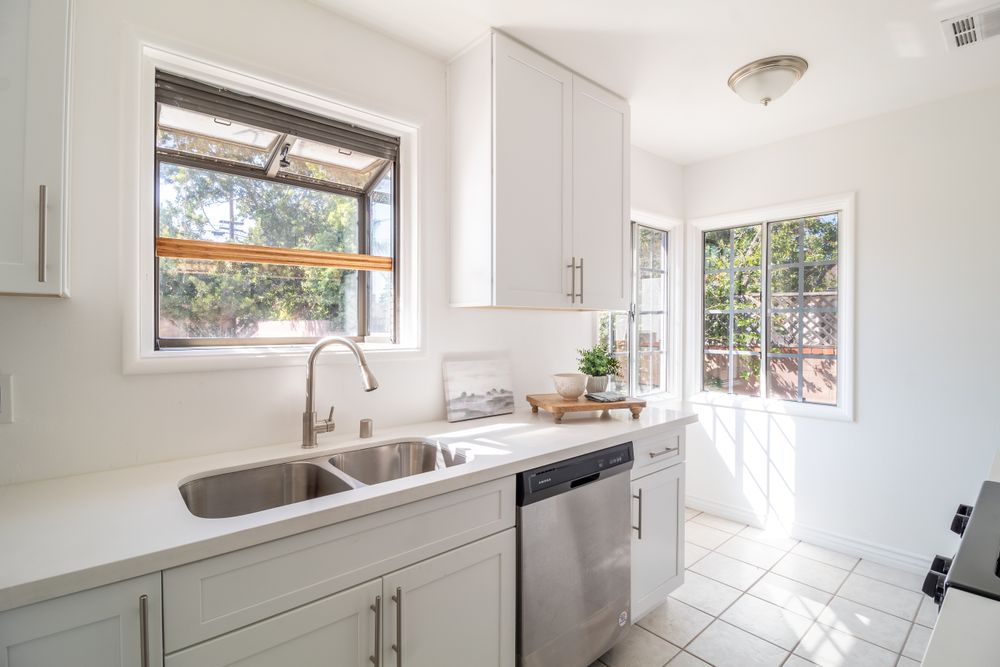
Close the valve behind the washer, toilet or sink. If you can't find it, shut off the main water valve for the house, often near the water heater, in a utility room or garage, or at the meter.
Step 2: Stay Safe Around Electricity
Keep away from outlets, cords and appliances sitting in water. Switch off the circuit at the breaker only if you can reach it without standing in water.
Step 3: Remove Standing Water
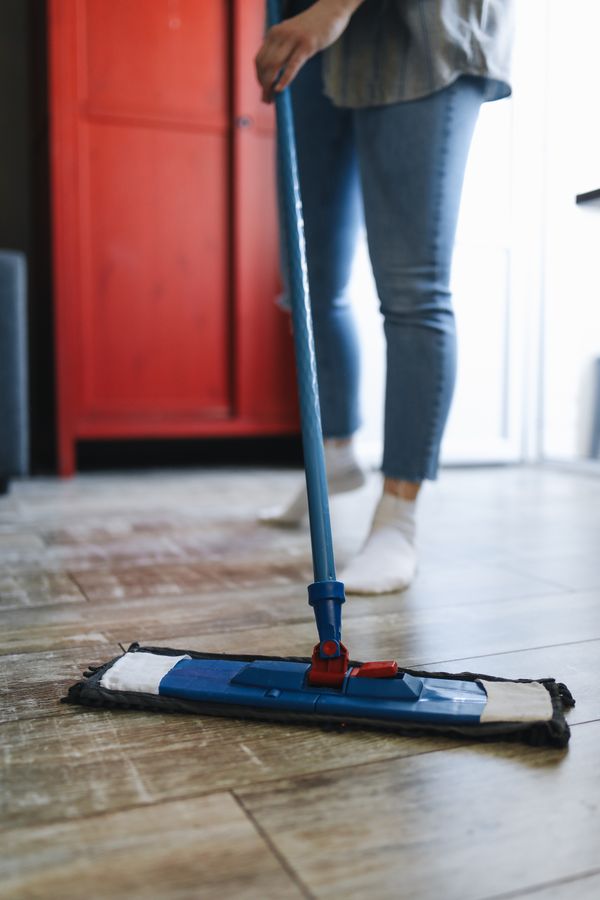
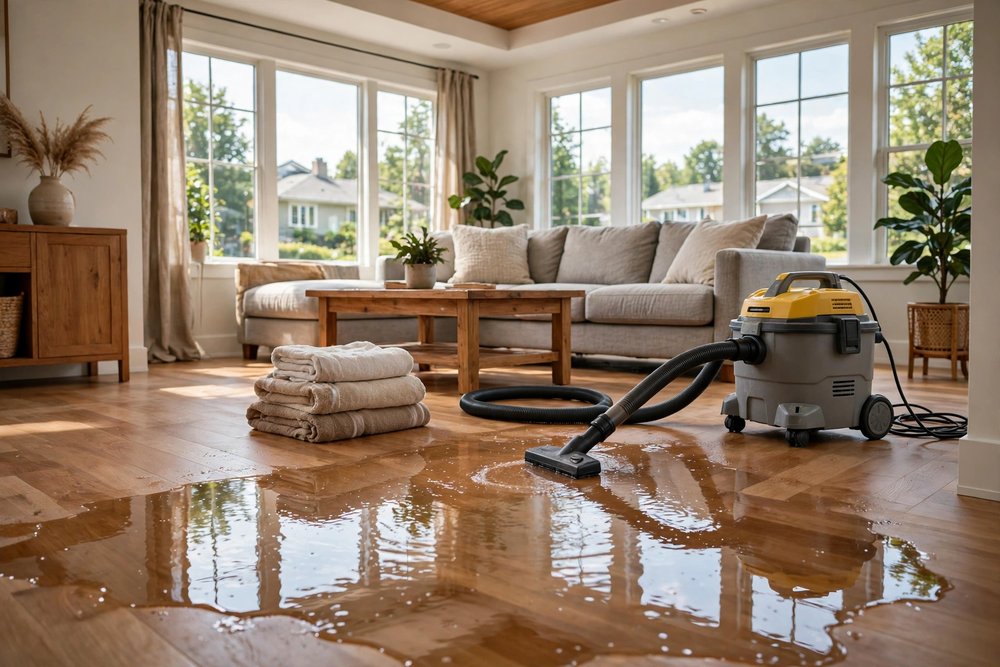
Use towels, mops or a wet/dry vac. Don't use a regular household vacuum. The goal is to stop water from soaking further into the boards and seams.
Step 4: Clear the Floor
Pull up rugs, runners and mats, and move furniture off the wet area. Rugs trap water against the wood, and furniture legs can stain wet boards.
Step 5: Leave the Boards Alone
Don't sand, nail, glue or cover wet boards. Don't put plastic or a rug over them to hide the damage. Wood needs to dry, and work done now can lock in problems.
Step 6: Take Photos
Photograph the source, the water and the floor before anything else is moved. It helps if you file an insurance claim.
Step 7: Get the Floor Tested
The surface can dry in hours while water stays under the boards and in the subfloor. A moisture test shows where the water really is. Emergency water removal · Hardwood floor drying
FAQs
Should I run fans on the floor?
Fans help the surface but don't reach water under the boards. Remove standing water and get the floor tested.
How fast should I call someone?
The same day if possible. The first 24 hours give the best chance to dry hardwood in place.
Related Hardwood Services
Water on your hardwood in the Tulsa area? Call 24/7: (918) 675-5474