Tulsa, OK
After Drying: Refinish or Replace Your Hardwood?
If the boards dried back close to flat, aren't stained deep or loose, and have enough wood left to sand, refinishing is usually the way. If boards stayed badly cupped, crowned, buckled, stained through or loose, or the floor is engineered with a thin top layer, replacing the damaged section is usually better. A hardwood flooring contractor makes that call after drying.
Drying Comes First, Every Time
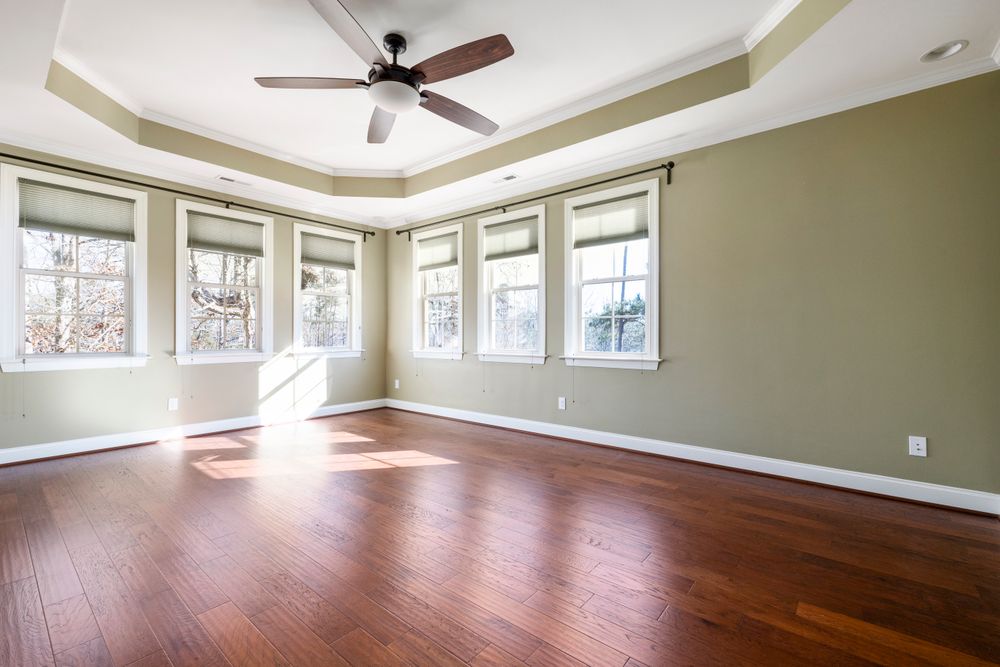
No refinishing or replacement should start until moisture readings show the boards and subfloor are dry and the floor has settled. Working on a wet floor can cause crowning, gaps or a new floor that cups.
- Signs Refinishing May Be Enough
- Boards are flat or nearly flat after drying
- Only the finish is damaged (white haze, light spots)
- Solid hardwood with plenty of wood above the tongue
- No soft spots or loose boards
- Signs Replacement Is More Likely
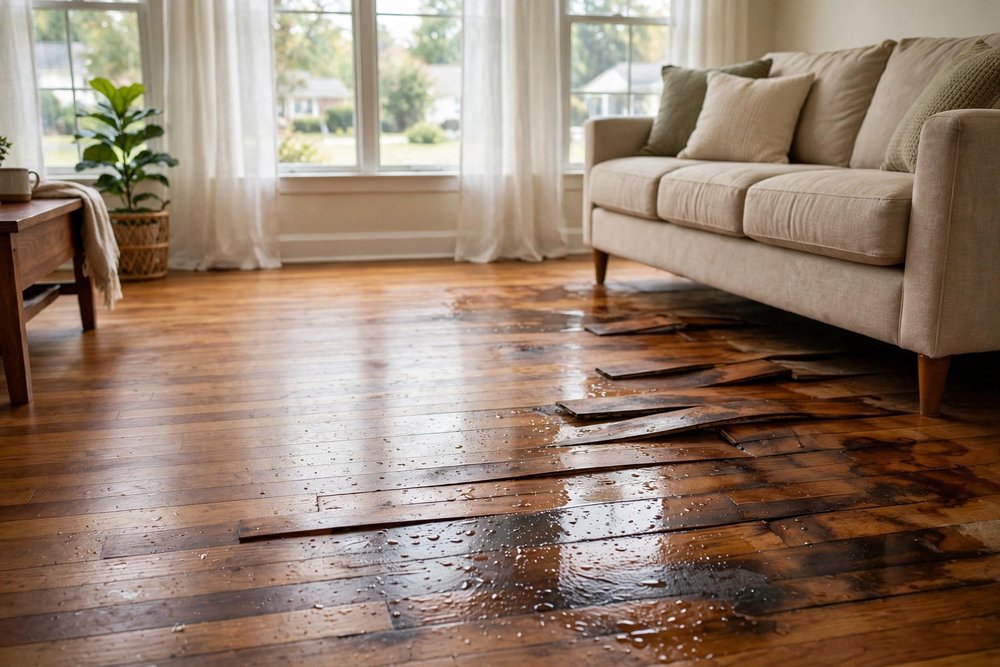
- Boards still cupped, crowned or buckled after drying
- Dark stains that go deep into the wood
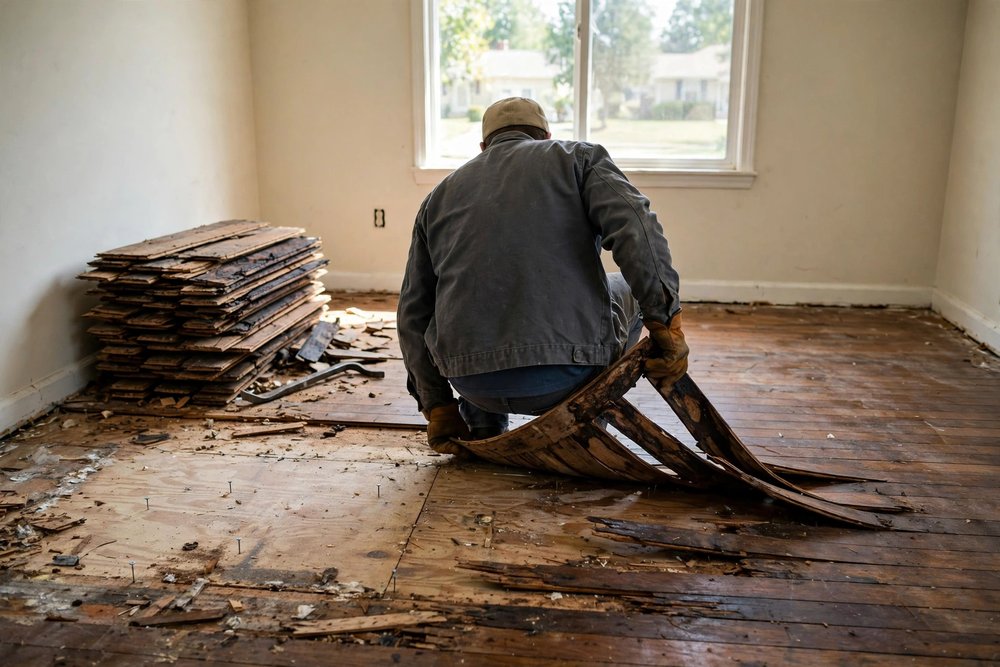
- Loose, split or soft boards
- Engineered planks that swelled or peeled
- A damaged or replaced subfloor under them
- Partial Replacement and Matching
Often only the damaged area is replaced. To make new and old boards match, flooring contractors commonly sand and refinish the whole room or connected area after the new boards go in.
Who Does What
| Step | Who |
|---|---|
| Water removal, drying, removing damaged boards | Water damage team |
| Refinishing, matching, new boards | Hardwood flooring contractor |
Water-damaged hardwood restoration · Tear-out and dry-out
Not sure if your Tulsa floor is dry enough to decide? Call 24/7: (918) 675-5474