Tulsa, OK
Solid vs Engineered Hardwood: Water Damage Differences
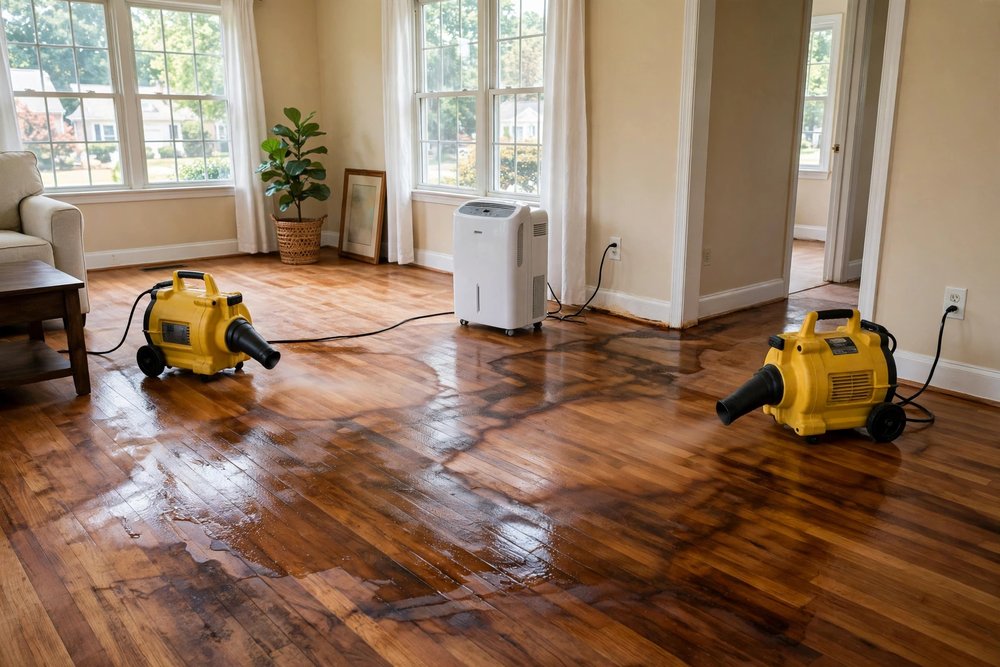
Solid hardwood usually cups, crowns or buckles when wet, and can often be dried and later sanded. Engineered hardwood can swell at the core or peel apart at the glue line, and once that happens drying won't fix it. Both can be saved if water is removed and dried quickly.
How Each Is Built
| Solid hardwood | Engineered hardwood | |
|---|---|---|
| Build | One piece of wood | Thin hardwood top layer on a plywood or fiber core |
| Install | Usually nailed | Glued, nailed or floating |
| Sanding later | Usually several times | Limited by top layer thickness |
How Each Reacts to Water
| Sign | Solid | Engineered |
|---|---|---|
| Cupping | Common | Common |
| Buckling | Possible with lots of water | Possible, especially glue-down |
| Edge swelling | Less common | Common when the core absorbs water |
| Peeling top layer | No | Yes (delamination) |
Which Is Easier to Save?
Caught early, both often dry well. After longer exposure, solid boards have a better chance of being sanded flat later, while swollen or peeling engineered planks usually need replacing. Floating engineered floors can trap water on the pad underneath, which means pulling planks to dry it.
What to Do
Remove the water, keep traffic off the floor and get moisture readings on both the planks and the subfloor. Engineered hardwood water damage · Water-damaged hardwood
Wet floor in the Tulsa area? Call 24/7: (918) 675-5474